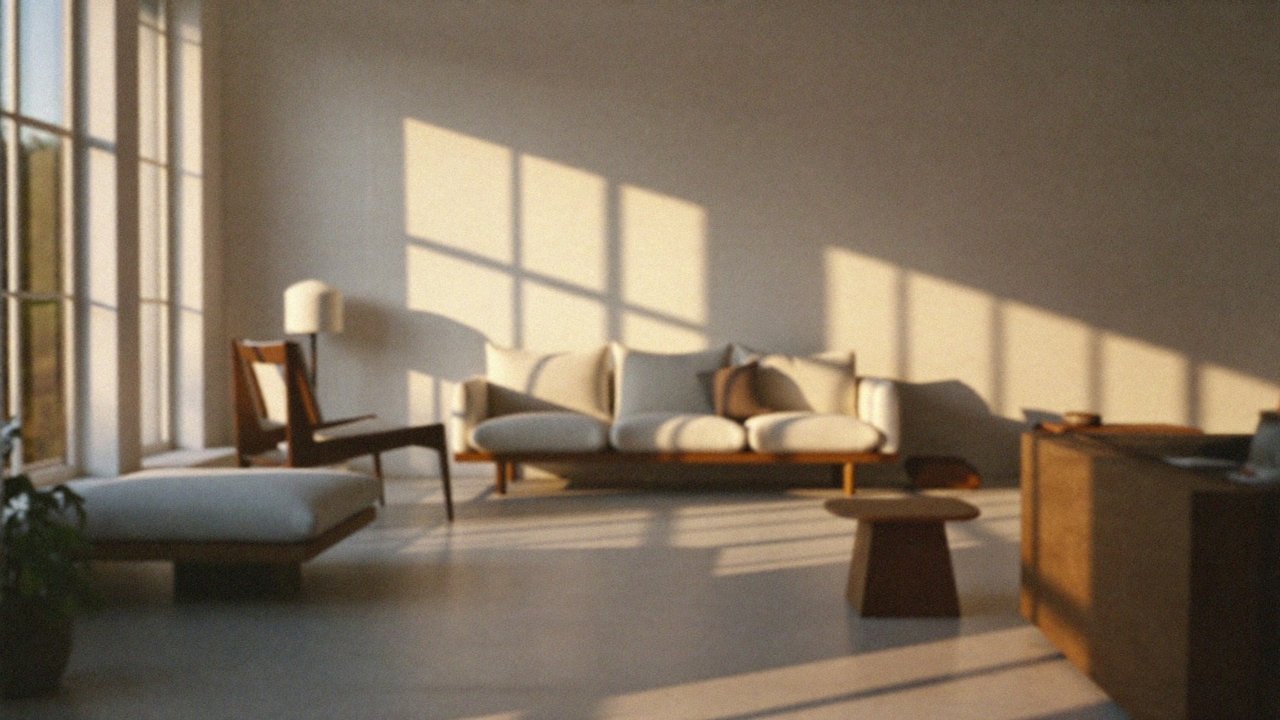
The hardest moment in an interior design proposal is the gap between the concept board and the client saying yes. The designer can see the room finished — the walnut credenza against the warm plaster wall, the linen drapery filtering afternoon light, the brass picture rail catching the highlight from the window. The client cannot. They are looking at swatches and a mood board and trying to imagine an outcome they have no experience visualizing.
The clients who can do this well — usually the ones who have hired designers before — sign quickly. The clients who can't take three weeks of revisions, multiple meetings, and gradually narrowing trust to commit to a direction. By that point, the designer has already given away the best ideas for free, and the client is choosing between options that have started to feel diluted by the discussion.
This is the workflow problem AI virtual staging solves for interior designers. The "after" can exist before the project is committed.
The Old Workflow: Concept Boards and Faith
The traditional design proposal process: site visit, measurements, mood board, concept presentation, two to three rounds of revisions, signed agreement, then specification and procurement. The mood board does the heavy lifting at presentation — and it asks the client to extrapolate from a collage of inspiration imagery and material swatches to a specific room outcome they have never seen.
Some clients can do this. Most cannot. The ones who can't ask for changes that aren't really about the design — they're about not being sure what the design is. The designer revises. The client still isn't sure. The cycle repeats. By the time everyone agrees on direction, two weeks have passed and the project has lost its initial energy.
The New Workflow: Photoreal Render Before Sign-Off
Designers who have integrated AI virtual staging into their proposal process do this differently:
- Site visit, measurements, photographs of the empty (or to-be-emptied) rooms.
- Concept brief written for two or three direction options — material palette, mood reference, key furniture pieces.
- AI virtual staging applied to the empty room photos, generating photoreal renders of each direction option.
- Presentation: the designer walks the client through three real-feeling images of the actual room, not three mood boards.
- Client picks a direction. Often in the first meeting.
The compression isn't trivial. Our interior design case study walks through one studio's specific transition from concept-board presentations to AI-staged proposals, and the corresponding compression in client signoff time — from an average of five days to under twenty-four hours, with a meaningful lift in proposal close rate.
Why This Works on Clients Who Couldn't Visualize
The mood board asks the client to do creative work the designer has been trained to do. It assumes a kind of visual fluency that most clients don't actually possess. The photoreal render asks the client to do something everyone can do: react.
"I love the warm plaster but the credenza feels too dark — what about lighter wood?" That's a productive client conversation. It's specific. It's about the design. It moves the project forward. Compare to: "I'm not sure about the mood board — can we look at some other options?" That's a client who doesn't know what they want because they can't see what's been proposed.
AI staging makes the proposal legible to clients who would otherwise stall.
The Specific Workflow for Designers
Here is what designers send us, and what we send back:
- Source photo. One or more high-quality photos of the empty room. Phone photos are fine if they're sharp; DSLR is better for hero presentation images. Multiple angles per room help.
- Style brief. A short written description of the direction — material palette, key pieces, mood. Reference imagery if you have it.
- Variations requested. One direction at a time, or two to three direction options for an A/B/C presentation. We can produce all variants from the same source photo.
- Returned: photoreal renders. Same room, fully furnished and styled, in 24 to 48 hours. High-resolution, presentation-ready.
Designers who do this regularly typically request two to three direction variants on the first proposal — gives the client a real choice between defined directions instead of an open-ended question. Clients respond to the constraint. The proposal gets signed faster.
Cost Comparison: AI Staging vs. Traditional Rendering
Traditional photoreal interior rendering — the kind a 3D render artist produces — runs $300 to $1,500 per view, with one to two weeks of turnaround. For a single proposal with three direction options across two rooms, you're looking at $1,800 to $9,000 in render costs and two weeks before the proposal is ready to present.
AI staging at our standard rate is $25 per room with 48-hour turnaround. Three options across two rooms: $150, two days. The math doesn't compete.
The quality threshold is also worth naming. Traditional 3D rendering at the high end produces images more controllable than AI output — the designer specifies every piece, every material, every reflection. AI virtual staging produces images photographically real but slightly less specifiable; the AI makes choices about specific furniture and styling that the designer is constraining via the brief, not specifying piece-by-piece. For client presentation, this is the right tradeoff. For final spec documentation, traditional rendering still has its place.
The Proposal-Stage ROI
Most designers we work with are not optimizing for cost savings on rendering. They're optimizing for proposal close rate. The math: if AI virtual staging lifts proposal close rate from 40% to 55% — which is consistent with what our designer clients have reported — and the average project value is $40,000, every additional won proposal is meaningful revenue. The cost of the AI staging is negligible against that lift.
The secondary benefit: fewer revision rounds on signed projects. Clients who saw a photoreal render in the proposal know what they signed up for. Surprise during installation drops dramatically. Designer hours saved on the back end usually exceed the time saved on the front end.
Where to Start
Send us one empty-room photo and a one-paragraph style brief. We'll return a photoreal staged render — free, watermarked — so you can show it to a client and decide whether the workflow fits your practice. See our full virtual staging service or request a free sample edit here.